
🌱 GrowMore CookMore App
Know what to sow, when to harvest, and discover recipes for your garden produce.

Free plants. That’s what seed saving is. Free plants for next year. And the year after that. And the year after that. Once you start saving your own seeds, you’ll wonder why you ever spent money on packets from the garden centre. Well, okay, you’ll still buy some packets because there’s always something new and exciting to try, but at least the basics — beans, peas, tomatoes, lettuce — can all be grown from seed you saved yourself. From plants you grew yourself. From seeds you saved from plants you grew from seeds you saved from… you get the idea. It’s a beautiful self-sustaining cycle. And it’s cheap as chips.
I started saving seeds about three years ago because, honestly, I was spending a fortune on seed packets every spring. I’d walk into the garden centre “just for some string” and come out with forty quid’s worth of seeds. Every year. Without fail. Seed saving has cut my annual seed bill by about two-thirds. That’s real money. Real money that now goes on bacon sandwiches from the allotment cafe, which is a much better use of it if you ask me.
Now, there are some rules and caveats to seed saving — it’s not quite as simple as just grabbing seeds from any plant and throwing them in an envelope. But the basics are dead easy, and for the crops most of us grow, it’s a no-brainer. So let me walk you through it.
The Easy Ones — Beans and Peas
Beans and peas are the absolute easiest seeds to save. So easy it’s almost not worth writing about. But I will because some people don’t know, and everyone needs to start somewhere.
Just leave some pods on the plant until they’re completely dry and brown. Not green, not half-brown, but properly dry and rattly. You’ll hear the seeds loose inside when you shake the pod. Pick the dried pods, split them open, and there are your seeds for next year. Lay them out somewhere dry for a few more days to make sure they’re bone dry, then pop them in a paper envelope (not plastic — they need to breathe), label them, and store somewhere cool and dry.
I save runner bean, French bean, and broad bean seeds every year. I select the best, healthiest plants and leave the last flush of pods to mature for seed. Runner beans produce these massive black and pink seeds that look like little jewels. Very satisfying. I’ve been growing the same strain of runner beans for four years now without buying any seed. They’ve adapted to my plot’s conditions and they’re performing better every year. That’s the real magic of seed saving — local adaptation.

Tomato Seeds
Tomato seeds are slightly more involved because they’re surrounded by a gel coating that inhibits germination. You need to ferment this off. Sounds scientific but it’s dead easy.
Choose your best, tastiest tomato from your best plant. Cut it open and scoop the seeds and gel into a small jar with a splash of water. Leave it on the kitchen windowsill for three or four days, giving it a stir once a day. It’ll go a bit manky and develop a film of mould on top. That’s good — the fermentation is breaking down the gel coating. It smells a bit dodgy. Just warn anyone you live with.
After four days or so, add more water to the jar. The good, viable seeds will sink to the bottom. The bad ones and the goop will float. Pour off the floating stuff, rinse the good seeds in a sieve, and spread them on a plate or kitchen paper to dry. Once completely dry (give them about a week), they’re ready to store. I put mine in small coin envelopes labelled with the variety and year. Job done.
I’ve been saving ‘Gardener’s Delight’ tomato seeds for three years and the plants get better every year. They’re adapted to my greenhouse, they fruit earlier, and they taste incredible. Ronny saved seed from some Italian variety he got from a friend and he’s been growing them for about ten years. They’re spectacular. He guards those seeds like gold.
Lettuce and Herb Seeds
Lettuce goes to seed naturally if you leave it long enough — those tall flower stalks with the little dandelion-like puffballs are the seed heads. Let them dry on the plant, then cut the whole stem and shake the seeds into a paper bag. Tiny seeds, loads of them. One plant produces enough seed for about a hundred lettuces. Which is more lettuce than any human needs, but still, nice to have options.
Herbs are similar. Let some of your basil, coriander, dill, or parsley flower and set seed. Once the seed heads are dry and brown, cut them off and shake the seeds out over a sheet of paper. Store in envelopes. Coriander is particularly easy — the round seeds are a decent size and easy to collect. Plus coriander seed is also a spice you can use in cooking, so it’s dual purpose.
Courgette and Squash Seeds
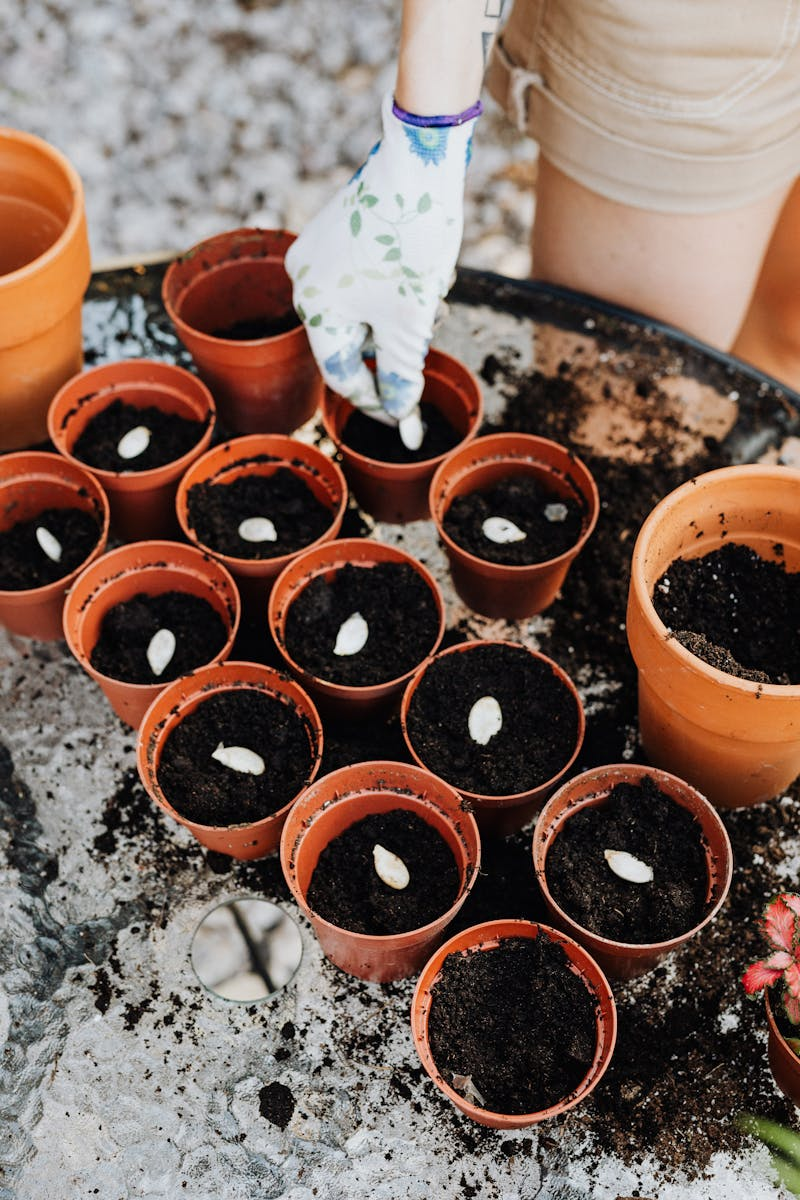
These are fun. Leave one courgette or squash on the plant until it’s absolutely massive — like, comically big. For courgettes, this means letting it grow into a marrow. I know, I know, nobody actually wants marrows. But you want the seeds, and the seeds need the fruit to be fully mature to be viable.
Leave it on the plant as long as possible, then bring it in and leave it somewhere warm for another few weeks. Cut it open, scoop out the seeds, wash off the pulp, and spread them on a plate to dry. Easy. The dried seeds store well for years.
WARNING though — if you’re growing multiple varieties of squash or courgette, they can cross-pollinate. This means the seeds might produce something… unexpected next year. Which can be fun (surprise squash!) or disappointing (weird mutant courgette that tastes of nothing). If you want to be sure you’re getting the same variety, only grow one type. Or hand-pollinate, which is fiddly but gives you certainty. I’ve had some interesting cross-pollinated results over the years. Some good, some very much not good.

Storing Seeds Properly
The three enemies of stored seeds are moisture, heat, and light. Keep your seeds dry, cool, and in the dark, and most will stay viable for years. Paper envelopes in a tin box in a cool cupboard is the classic method. Some people use the fridge — stick the envelopes in an airtight container with a sachet of silica gel (the little packets you get in shoe boxes) and they’ll keep for ages.
Always label everything. Variety, year saved, and any notes about the plant — “good cropper”, “early maturing”, “the one that survived the drought.” Trust me, you will not remember what those seeds are by next spring. You’ll stand there in March with an envelope of mystery seeds going “is this the tomato or the pepper?” Label them. Now. While you still know.
Most vegetable seeds stay viable for three to five years if stored properly. Some last longer — tomatoes and cucumbers can last up to ten years. Some are shorter — parsnips and onions are really only good for a year. A general rule is to sow your oldest seeds first and keep the fresh ones in reserve.
The Community Angle
One of the best things about saving seeds is sharing them. Seed swaps are brilliant — bring your saved seeds to the allotment or a local gardening club, and swap with other people. You end up with varieties you’ve never tried before, often heritage varieties that aren’t available commercially. Audrey brought some incredible climbing French beans to our last seed swap that her grandmother used to grow. You can’t buy them anywhere. That’s living history in a seed packet.
We do an informal seed swap at our allotment every February. Everyone brings their labelled envelopes, we spread them out on a table in the shed, and you just take what you want and leave what you’ve brought. It’s like the most wholesome car boot sale you can imagine. No money changes hands. Just seeds and knowledge and cups of tea. That’s community gardening at its best.
📱 Track Your Seeds with GrowMore CookMore
Seed saving means keeping track of what you’ve saved, when you saved it, and what variety it is — and honestly, that can get confusing fast when you’ve got twenty envelopes of different seeds. The GrowMore CookMore app’s Garden Journal is perfect for this — log your seed saving alongside photos so you know exactly what came from which plant. The Cost Tracker is brilliant too — logging your seed purchases against your saved seeds really shows you how much money you’re saving each year. And the Grow Calendar tells you when to sow all those saved seeds, timed perfectly for your location, so nothing goes to waste. It’s like having your own personal seed bank manager in your pocket. Get it on the App Store and start building your seed collection.
Look after yourselves. Take good care. 🌱
Leave a Reply