The garden-to-kitchen app
GrowMore
CookMore
Grow it. Cook it. Love it.
The gardening app that bridges your garden and your kitchen. Know what to sow, when to harvest, and discover delicious recipes matched to your seasonal produce.


Free to download · iPhone & Android · UK and USA
Grow-Your-Own — Three Courses
Your First Allotment, Your First Polytunnel and Your First Container Garden — £27 each, or all three for £59. Plain English, lifetime access.
Garden to table, made simple
Everything you need, in one app
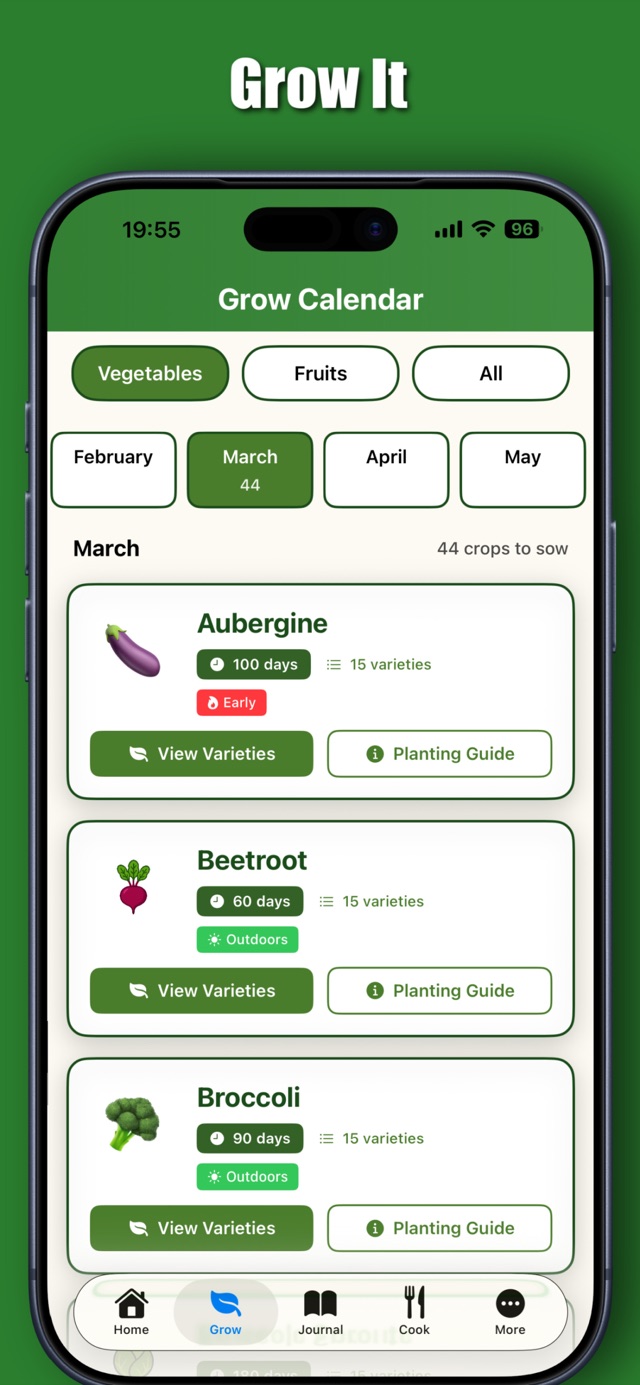
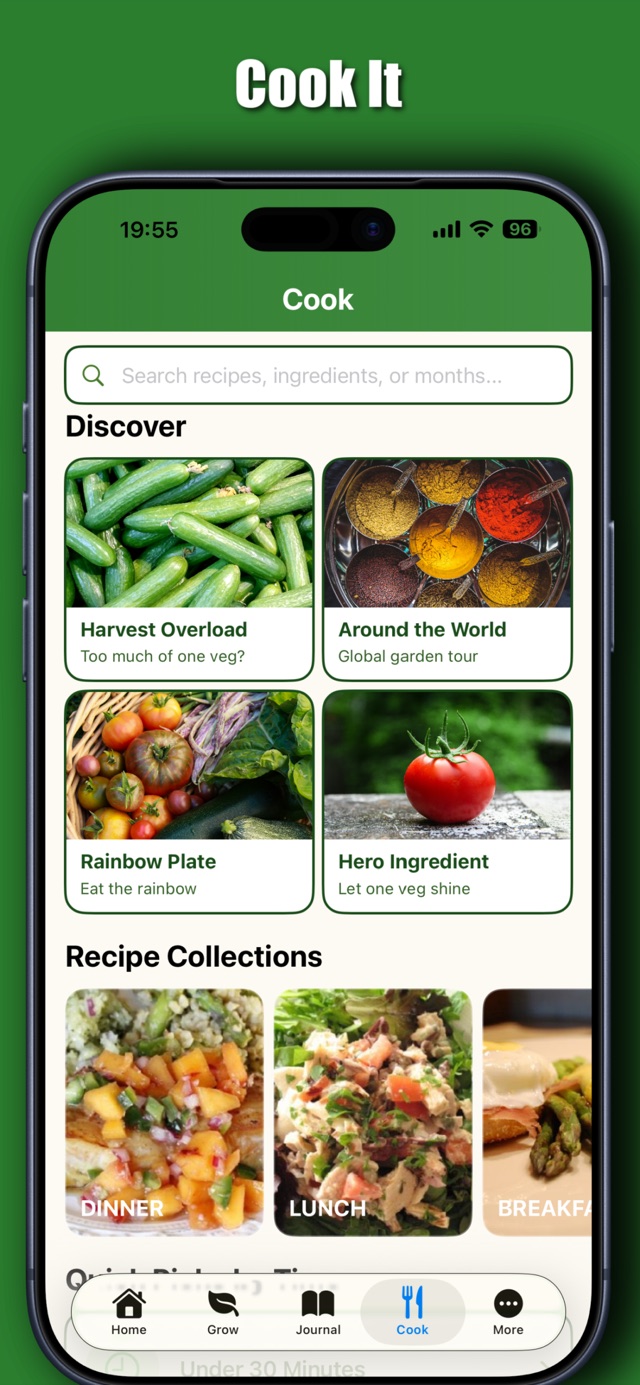
Grow your own food and turn your harvest into delicious meals — here's a look around.
← Drag to explore the app →
Everything the app does
From the first seed of spring to the last jar of passata.
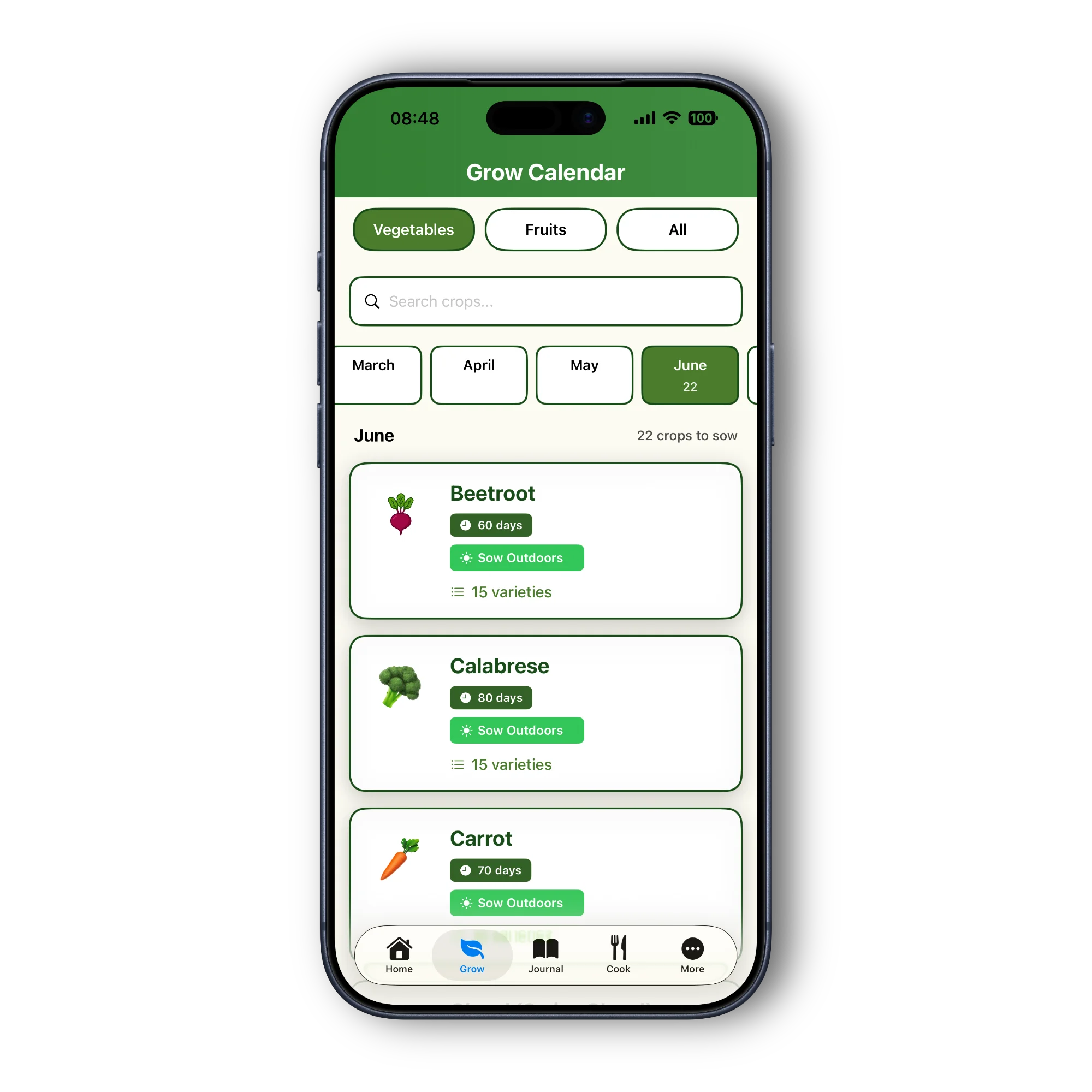
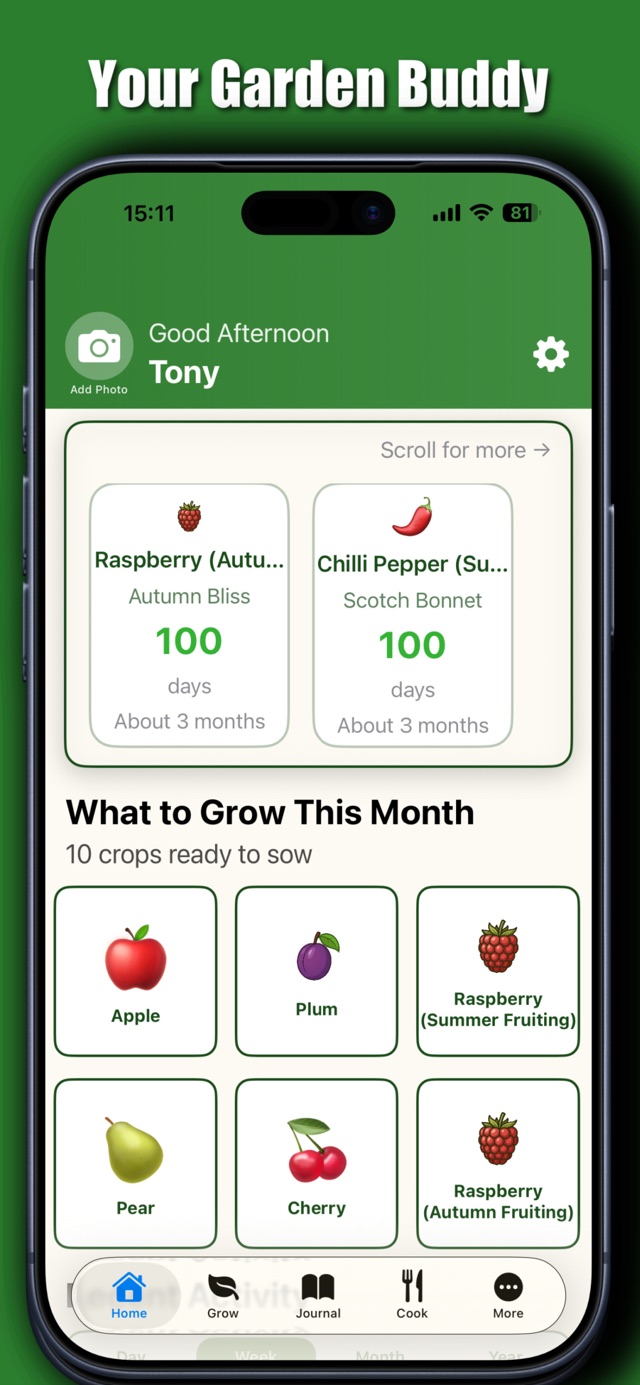
Seasonal Sowing Guide
Know exactly what to plant and when, with growing dates tailored to your location.
84 Fruit & Vegetables
Comprehensive database with multiple varieties and detailed growing info.
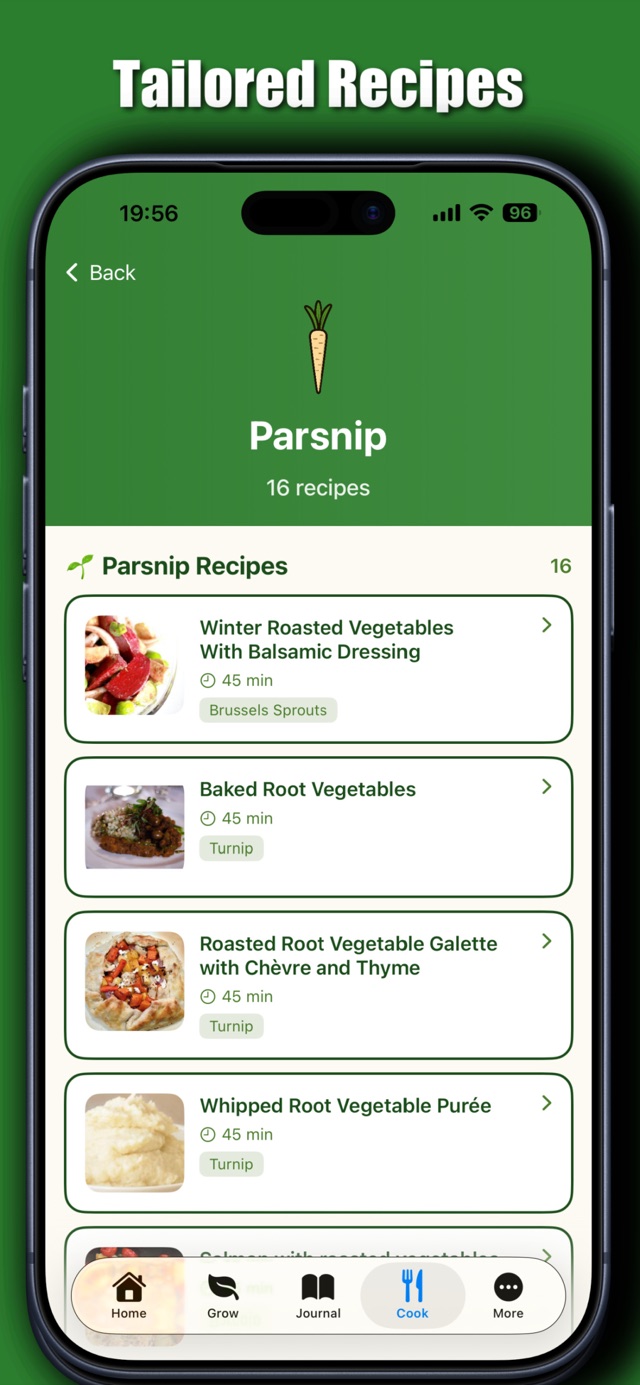
200+ Harvest Recipes
Discover recipes matched to what's ready in your garden. No more waste.
UK & USA Support
Region-specific growing dates for UK gardeners and USDA zones 3–10.
Harvest Overload
Too much of one veg? Find creative recipes to use up your glut.
Hero Ingredient
Let one vegetable shine with recipes that make it the star of the dish.
Rainbow Plate
Eat the rainbow with colourful recipes using your garden's variety.
Around the World
Global recipes that transform your home-grown produce into international dishes.
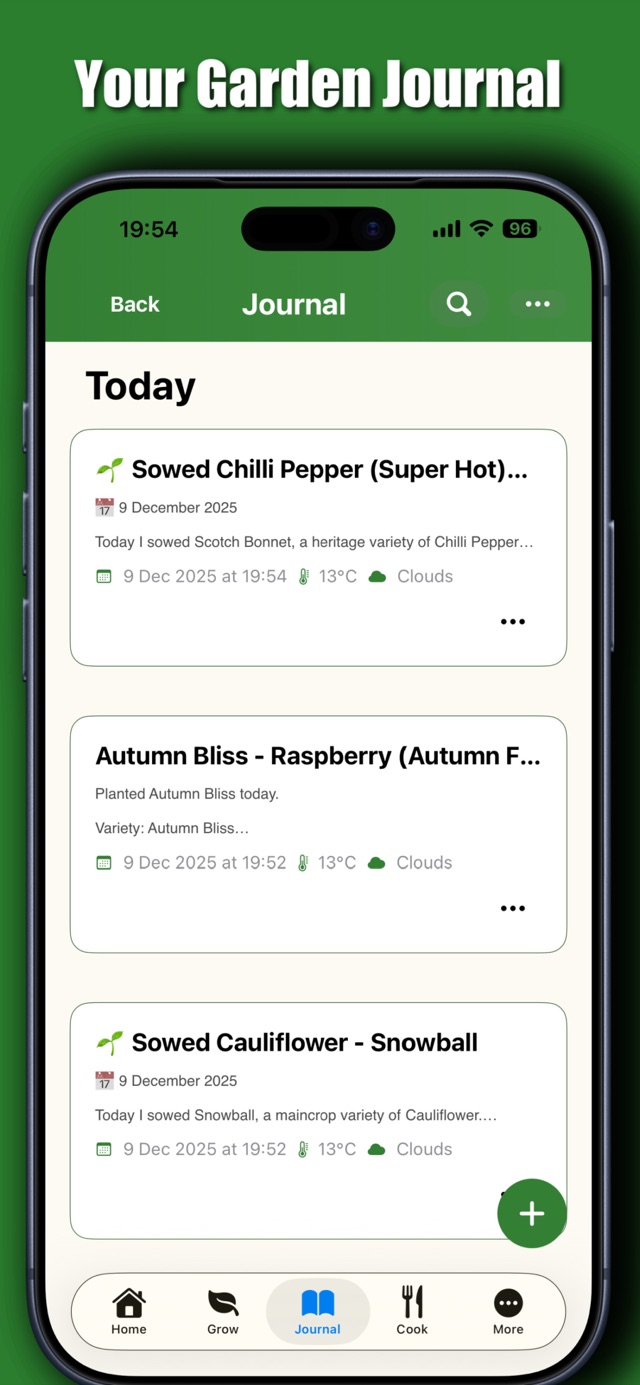
Garden Journal
Document your growing journey with photos and notes throughout the seasons.
Garden Timeline
See your garden story unfold season by season.
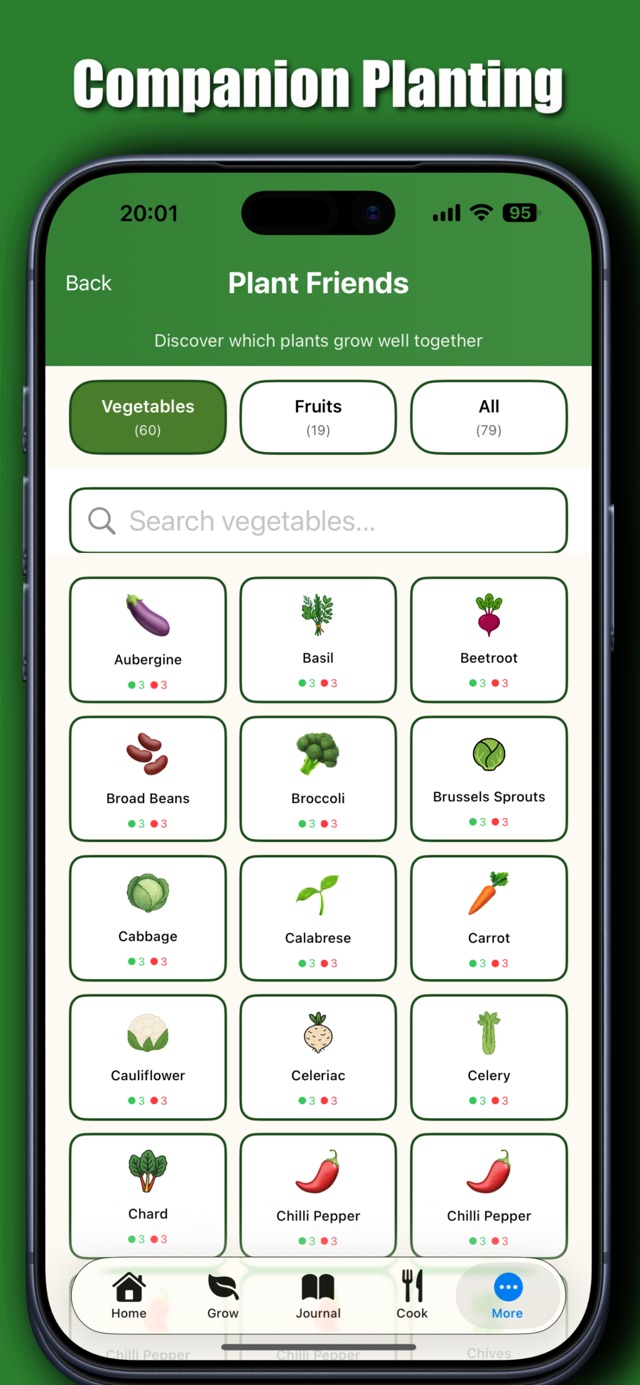
Companion Planting
Learn which plants thrive together with science-backed guidance.
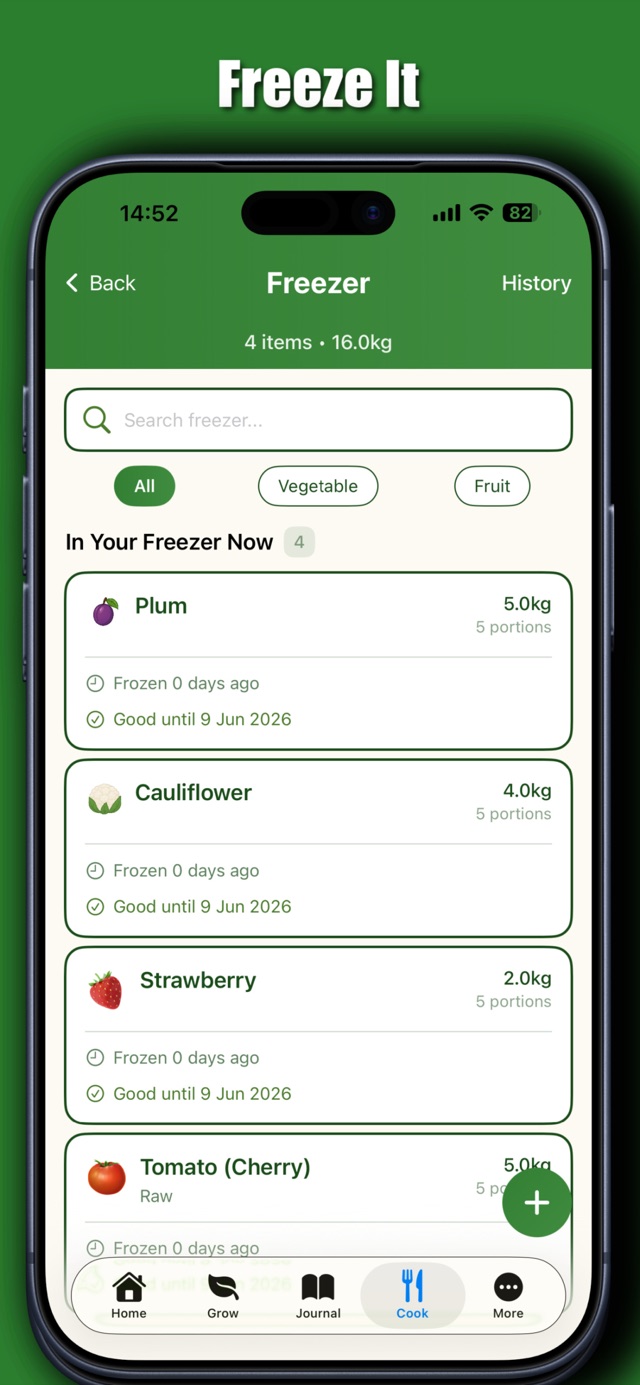
Freezer Tracker
Track what you've frozen with best-before dates so nothing goes to waste.
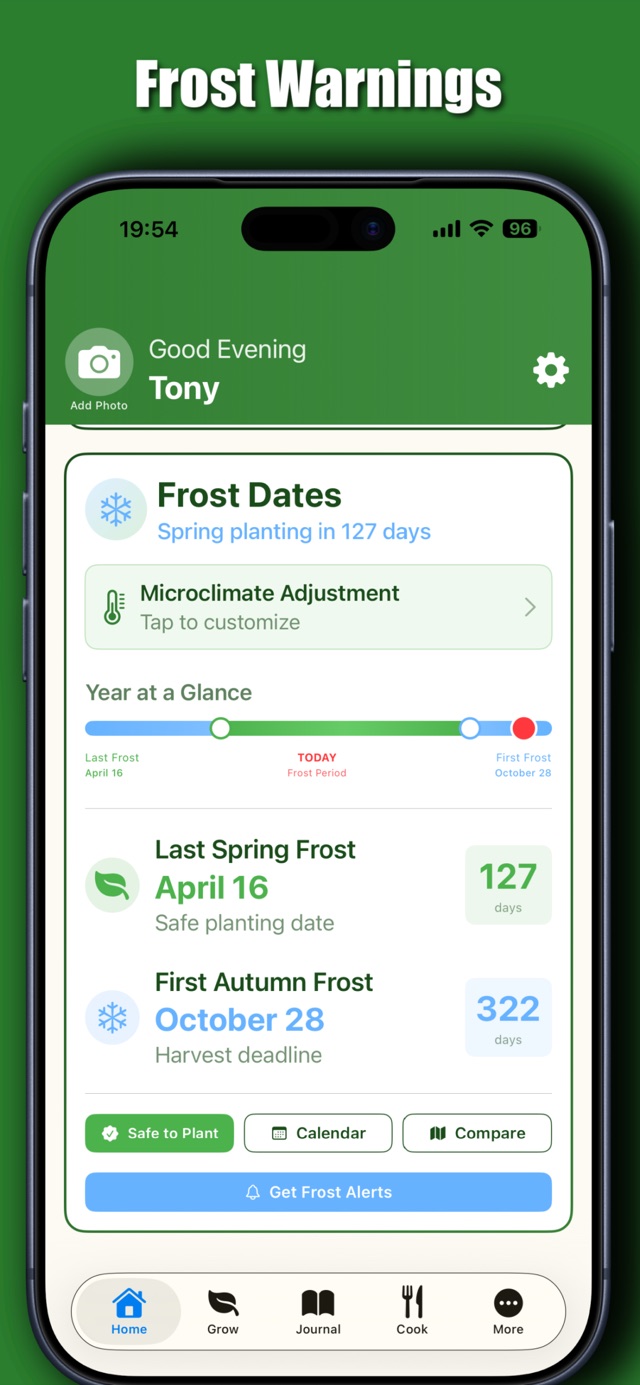
Frost Dates & Alerts
Know your first and last frost dates. Get alerts to protect your plants.
Live Weather
Real-time weather data to help you plan your gardening activities.
Harvest Forecast
See what's coming up for harvest so you can plan meals ahead.
Analytics
Garden insights and statistics to track your growing success.
Budget Tracker
Track your garden spending and see the value of your homegrown produce.
Seasonal Tasks
Monthly reminders for what needs doing in your garden right now.
Daily Garden Quotes
Inspiring quotes to motivate you through the growing season.
Shopping List
Keep track of seeds, tools, and supplies you need for your garden.
Meet the maker
Built by a Gardener,
for Gardeners
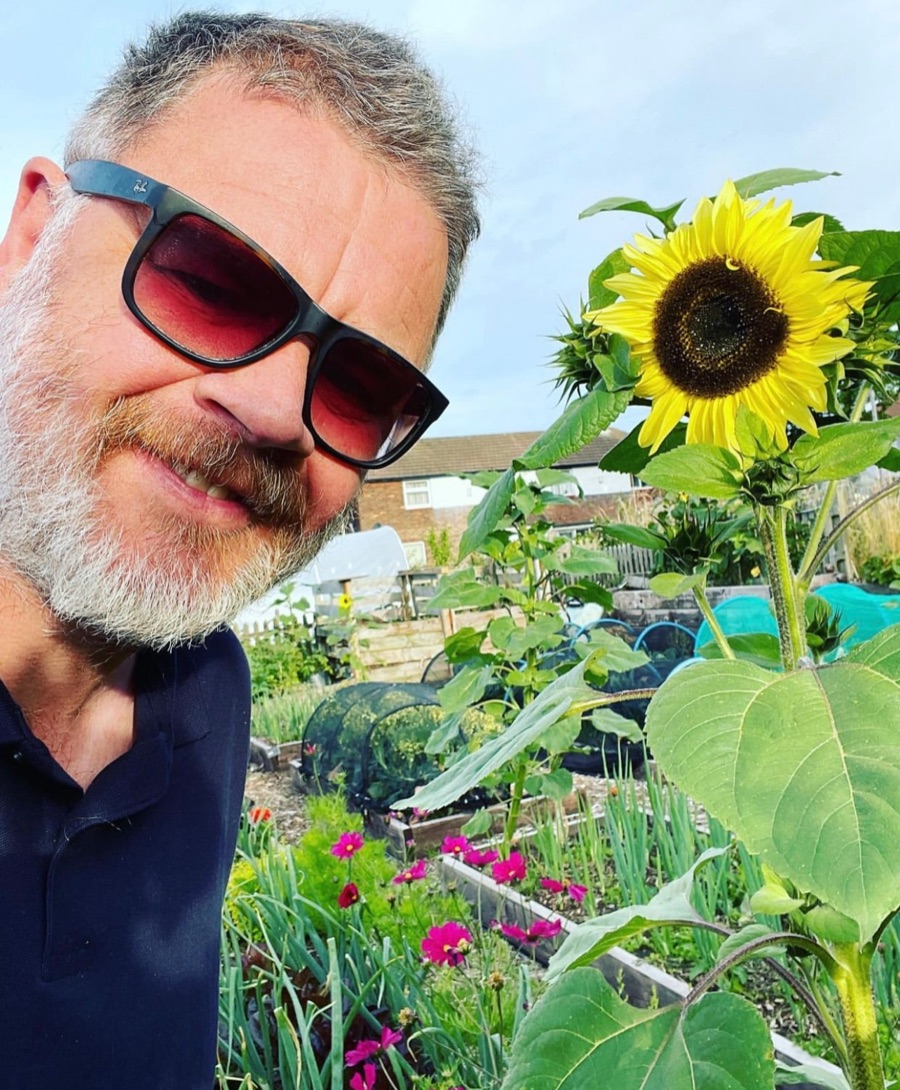
Hi, I'm Tony. I've been growing my own food for years and sharing the journey with over 50,000 subscribers on YouTube. I built GrowMore CookMore because I was frustrated with the gap between gardening apps and recipe apps.
This app answers the two questions every gardener asks: "What can I grow right now?" and "What can I cook with what I've grown?" It's practical, seasonal, and designed to help you waste less and enjoy more.
▶ Watch on YouTube🌱 Join the growing community
Grow more, cook more, waste less
Delivered to your inbox every week.
Free on iPhone & Android
Ready to Grow More & Cook More?
Join thousands of gardeners turning their harvests into delicious home-cooked meals.