
🌱 GrowMore CookMore App
Know what to sow, when to harvest, and discover recipes for your garden produce.

What Is Companion Planting?

Companion planting is one of the oldest tricks in the gardening book. The idea is simple: some plants help each other grow when planted nearby, while others compete, attract pests, or actively inhibit each other. Get it right and you can boost yields, deter pests and make better use of your growing space — all without reaching for a single chemical.
Companion planting is the practice of growing different plants in close proximity for mutual benefit. The benefits can include pest deterrence, improved pollination, better use of space, improved soil health and even enhanced flavour.
Some of these relationships are well proven by science. Others have been passed down through generations of gardeners and, while the evidence is more anecdotal, many swear by them. The GrowMore CookMore app includes companion planting guidance for all 84 of its fruit and vegetables — here are some of the best combinations to know.
The Three Sisters: The Most Famous Companion Planting System
The most celebrated companion planting system of all comes from Native American farming traditions. The Three Sisters — corn, beans and squash — are planted together because each supports the others.
Corn grows tall and gives the beans something to climb. Beans fix nitrogen from the air into the soil, feeding the corn and squash. Squash spreads along the ground, its large leaves shading out weeds and keeping the soil moist.
It’s a beautiful system that has been feeding people for thousands of years and works just as well in a modern kitchen garden.
Best Companion Planting Combinations
Tomatoes and Basil
Perhaps the most famous pairing in the kitchen garden — and happily it works in the kitchen too. Basil is said to repel aphids, whitefly and tomato hornworm, while many gardeners swear it improves the flavour of nearby tomatoes. Plant basil generously around your tomato plants and harvest both together for an instant Caprese salad.
Carrots and Onions
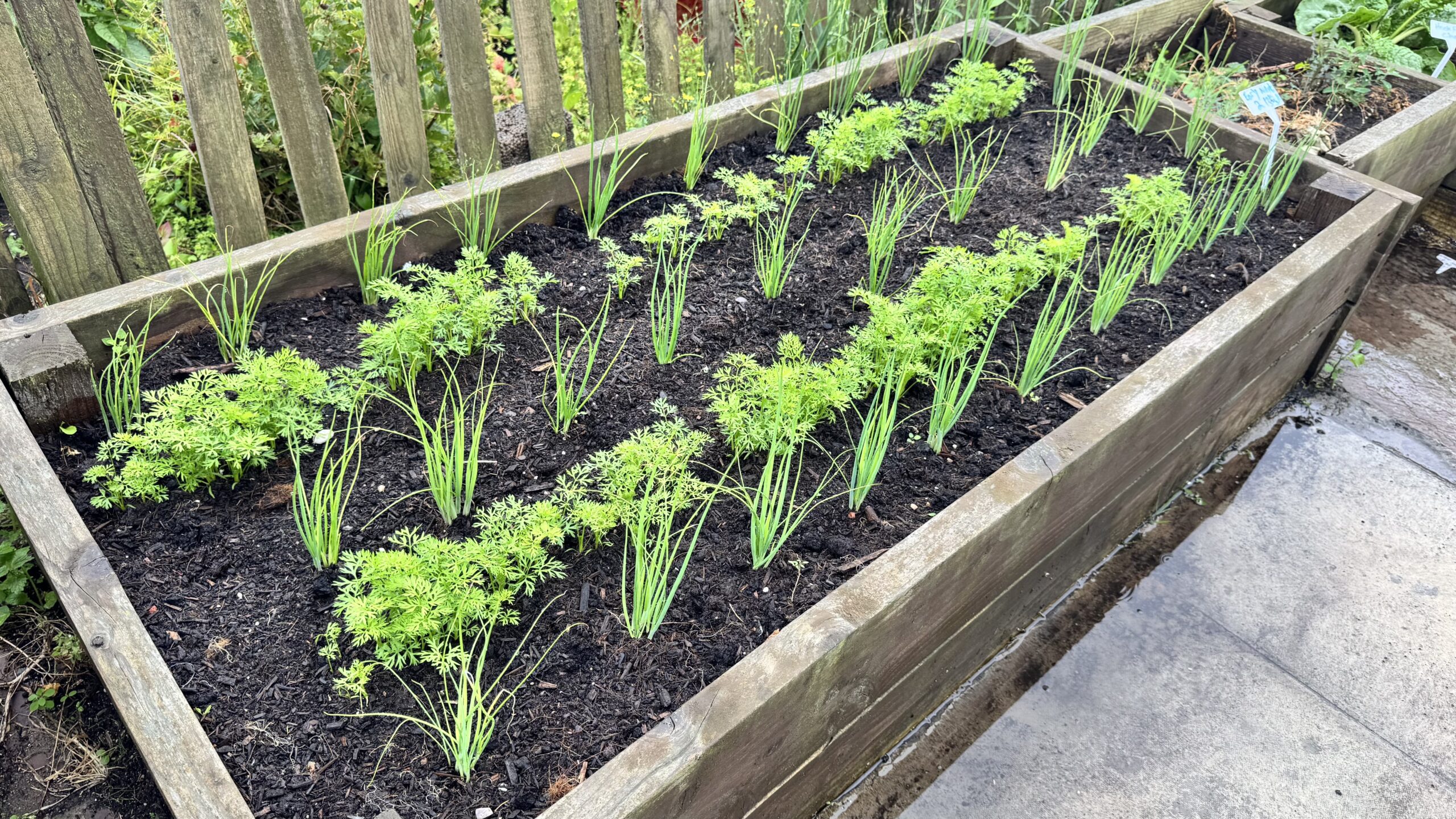
These two are classic companions. The strong scent of onions deters carrot fly, while carrots repel onion fly. Plant them in alternating rows and each protects the other. Leeks work equally well alongside carrots for the same reason.
Roses and Garlic
Not just a kitchen garden trick — garlic planted around roses deters aphids and black spot. The sulphur compounds in garlic act as a natural fungicide. This works well with any ornamental planting too.
Brassicas and Nasturtiums
Nasturtiums are brilliant companion plants for brassicas like cabbages, kale and broccoli. They act as a trap crop — aphids and caterpillars are attracted to the nasturtiums instead of your brassicas. Plant them around the edge of your brassica bed. As a bonus, nasturtium flowers and leaves are edible and make a peppery addition to salads.
Beans and Sweetcorn
Beans fix nitrogen in the soil which feeds the hungry sweetcorn. In return the corn gives the beans vertical support to climb. This is the backbone of the Three Sisters system but works just as well in a standard vegetable bed.
Courgettes and Borage
Borage is one of the most useful companion plants in the garden. Its star-shaped blue flowers attract pollinators which improves courgette (and squash) yields significantly. Borage also deters tomato hornworm and cabbage worms. It self-seeds freely so plant it once and it’ll come back year after year.
Lettuce and Tall Plants
Lettuce bolts quickly in hot weather. Plant it in the shade of taller crops like sweetcorn, tomatoes or beans and it’ll stay cooler, last longer and produce better leaves through the summer.
Peas and Mint
Mint deters aphids and ants which protects peas from damage. Be careful though — mint spreads aggressively. Grow it in a pot sunk into the ground near your peas to contain it.
Cucumbers and Dill
Dill attracts beneficial insects including predatory wasps that feed on cucumber beetles. It also attracts pollinators which improves cucumber yields. Let dill flower to get the full benefit.
Plants That Should NOT Grow Together
Just as some plants help each other, others are genuinely bad neighbours.
Onions and Beans — Onions inhibit the growth of beans and peas. Keep these well apart.
Fennel and Almost Everything — Fennel is the antisocial neighbour of the vegetable garden. It releases chemicals that inhibit the growth of most vegetables including tomatoes, peppers, beans and courgettes. Grow fennel in its own spot away from your main beds.
Potatoes and Tomatoes — Both are in the Solanaceae family and share the same diseases, particularly blight. Planting them together means disease can spread rapidly between the two. Keep them on opposite sides of the garden.
Brassicas and Strawberries — Strawberries inhibit the growth of brassicas. Keep them in separate beds.
Carrots and Dill — While dill is a good companion for cucumbers, it cross-pollinates with carrots and can affect the quality of both crops. Don’t grow them near each other.
Garlic and Peas — The same properties that make garlic a great pest deterrent also inhibit the growth of peas and beans. Keep them apart.
How to Use Companion Planting in a Small Garden
You don’t need a large plot to benefit from companion planting. Even in raised beds or containers you can apply the principles.
Mix herbs through your vegetable beds. Basil, chives, dill, mint (contained) and borage all earn their space as pest deterrents and pollinator attractors.
Use flowers as companions. Marigolds are perhaps the most useful companion plant of all — they deter aphids, whitefly and nematodes and attract pollinators. Plant them throughout your beds.
Think vertically. Pair tall and short crops so they use space efficiently and shade each other as needed.
Rotate your companions along with your crops. Companion planting works best alongside a good crop rotation programme.
Companion Planting in the GrowMore CookMore App
The GrowMore CookMore app includes companion planting guidance for all 84 of its fruit and vegetables. When you’re planning what to grow, you can see at a glance which plants make good neighbours and which to keep apart — taking the guesswork out of planning your beds.
It’s one of the features gardeners tell us they find most useful, especially when growing in smaller spaces where every planting decision counts.
Tony Smith is a gardener, YouTuber and the creator of the GrowMore CookMore app. He grows vegetables in the UK and shares the journey with 50,000 subscribers on YouTube.
Leave a Reply